
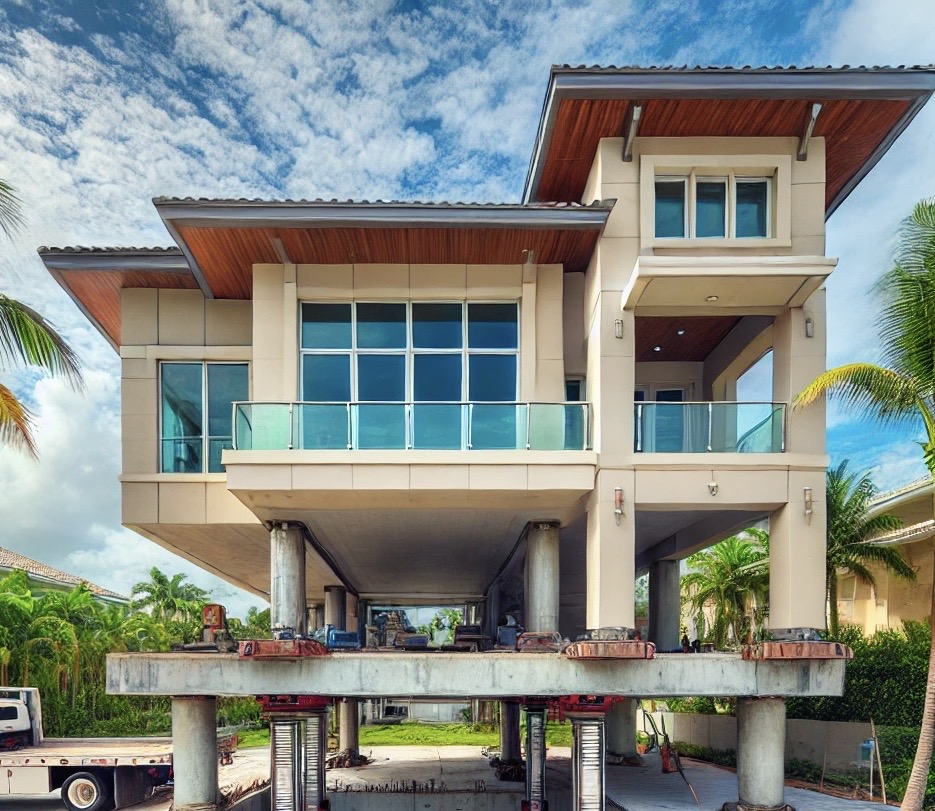

Raising a single-family home is a significant undertaking, especially in areas like Miami-Dade County, where environmental concerns such as hurricanes, flooding, and rising sea levels make elevation projects increasingly essential. This blog post outlines the steps involved, the benefits, and key considerations to ensure a smooth and successful home elevation project.
Why Raise a Home?
Flood Mitigation: Miami-Dade County is prone to flooding, particularly in flood zones. Elevating your home can reduce flood risks and lower flood insurance premiums.
Hurricane Resilience: Raising a home and reinforcing its structure can enhance safety during hurricanes.
Increased Property Value: Elevated homes often command higher resale values due to improved safety and compliance with modern building codes.
Code Compliance: FEMA and local regulations may require homes in flood-prone areas to meet specific elevation standards.
The Steps to Raise a Single-Family Home
1. Assess Feasibility
Start by determining whether your home can be elevated. Key factors include:
• Foundation type (slab-on-grade, crawl space, or pier).
• Age and structural integrity of the home.
• Zoning and land use restrictions in Miami-Dade County and the jurisdiction of the project location.
2. Understand Local Regulations
Miami-Dade County has specific requirements for home elevations:
• Check with the Building Department having jurisdiction for permits and flood zone regulations.
• Ensure compliance with FEMA’s Base Flood Elevation (BFE) guidelines for your area.
• Review your homeowner’s association (HOA) guidelines, if applicable.
3. Hire Qualified Professionals
Home elevation requires a team of experts, including:
• Architect: To guide the overall project and design new access to the site and the home.
• Structural Engineers: To assess your home’s integrity and design the elevation plan.
• Contractors: Specialized in lifting and shoring techniques.
• Surveyors: To map the land and existing structure and ensure proper drainage post-elevation.
4. Obtain Necessary Permits
Submit plans to the Building Department of your jurisdiction. You’ll need:
• A detailed site plan.
• Full architectural plans of the elevated layout and new access to the home.
• Engineering and structural plans, calculations, and reports.
• A topographic survey and elevation certificate.
• Proof of flood zone compliance.
5. Prepare the Site
Before lifting, contractors will:
• Disconnect utilities such as water, electricity, and gas.
• Excavate around the foundation (if necessary).
• Reinforce the structure to prevent damage during the lift.
6. Lift the Home
Using hydraulic jacks, your home will be lifted to the desired height. The process varies depending on the foundation:
• Crawl Space or Pier Foundations: Easier to lift and adjust.
• Slab Foundations: Require additional work, such as separating the slab from the home.
7. Build a New Foundation
Once the home is elevated, a new foundation is constructed. Options include:
• Concrete Piers or Columns: Common in flood-prone areas.
• Perimeter Walls: Provide a traditional look but must allow for water flow in flood zones.
8. Reconnect Utilities
After the foundation is built, utilities are reconnected, and systems like plumbing and electrical wiring are adapted to the new elevation.
9. Final Inspections and Approval
The Building Department will inspect the work to ensure it complies with all codes and regulations. After approval, you’ll receive a new elevation certificate.
Costs of Raising a Home in Miami-Dade County
The cost of raising a home varies widely depending on factors such as the size of the home, foundation type, and local labor rates. On average:
• Home Elevation: $50,000–$150,000.
• Foundation Replacement: $25,000–$75,000.
• Permits and Architecture/Engineering Fees: $35,000–$65,000.
Flood insurance savings and increased property value often offset these costs over time.
Key Considerations
1. Insurance Impacts: Elevating your home can lower flood insurance premiums significantly.
2. Historic Homes: If your home has historic value, additional permits and approvals may be required.
3. Environmental Impact: Ensure that the project includes proper drainage and erosion control measures.
4. Future-Proofing: Consider raising your home higher than the minimum FEMA requirements to account for future changes in flood risk.
Conclusion
Raising a single-family home in Miami-Dade County can be a practical solution to mitigate flood risks, improve safety, and comply with modern building standards. By following these steps and working with qualified professionals, you can elevate your home and secure peace of mind for years to come.
If you’re considering a home elevation project, Sebastian Eilert Architecture can begin planning today to ensure compliance and a successful outcome.
 Miami Green Homes
Leave a comment