
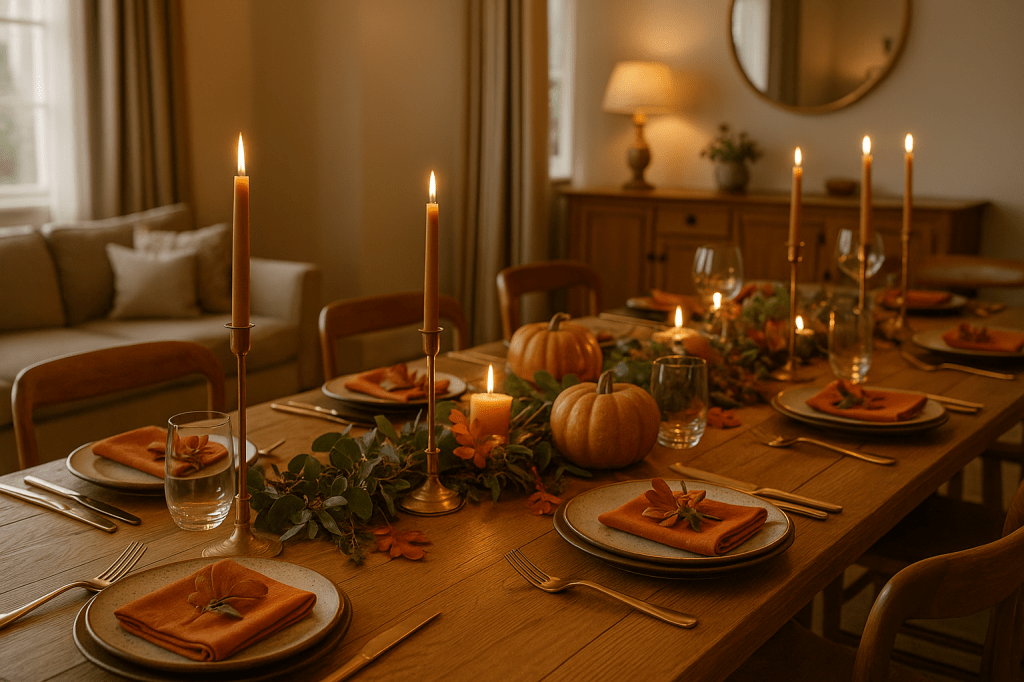
Thanksgiving is more than a meal — it’s a spatial experience. The flow of your home, the comfort of your guests, and the organization of your kitchen all play a crucial role in how the day feels. Thoughtful design transforms the holiday from hectic to harmonious, using space, light, materials, and function to create a memorable atmosphere.
At Sebastian Eilert Architecture, we approach holiday hosting the same way we approach residential design: beauty anchored by usability, and well-planned details that make every space feel intentional.
Follow the interior-design-centered guide to curating a Thanksgiving environment that works beautifully before, during, and after dinner.
1. Setting the Stage: Designing an Inviting Dining Table
The Table as the Holiday Centerpiece
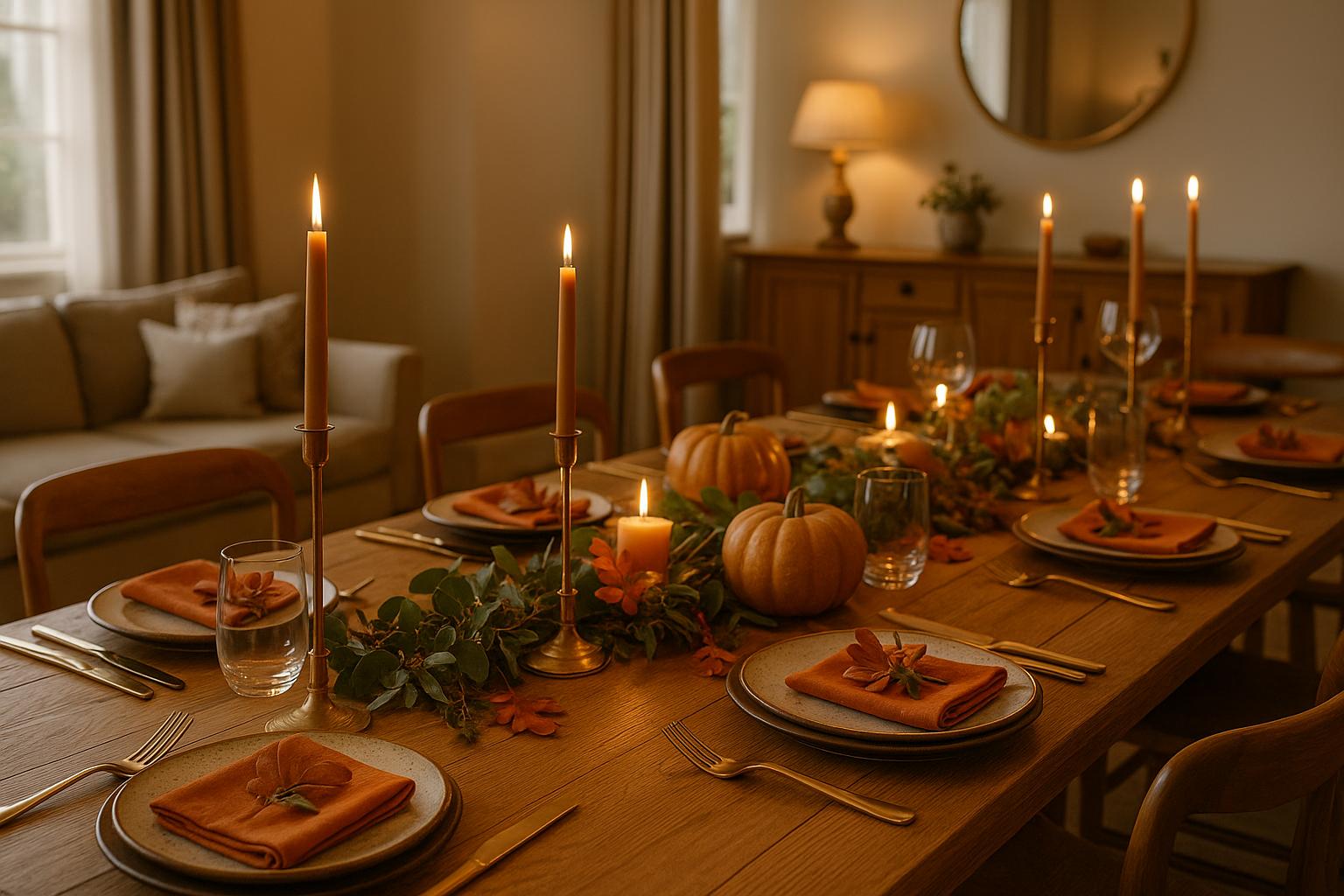
Thanksgiving dinner is a visual event as much as a culinary one. Your table setting should balance elegance with comfort, layering materials and textures to create warmth.
Design strategies:
- Layer natural materials. Combine linen or textured cotton napkins, stoneware plates, and wood chargers for a warm, tactile setting.
- Use contrasting heights. Low florals or greenery garlands paired with a few taller candles create rhythm without blocking sightlines.
- Mix warm metals carefully. Brushed brass, copper, or matte black flatware add sophistication without overwhelming.
- Choose a grounded color palette. Deep greens, terracottas, muted burgundy, ochre, and warm neutrals keep the table seasonal without becoming theme-heavy.
Mood Lighting: The Key to an Elevated Experience
Lighting defines the emotional tone of the meal. Avoid anything overly bright or cool-toned.
Guidelines:
- 2700K–3000K warm lighting is ideal for dining; it softens skin tones and enhances natural materials.
- Use a combination of:
- dimmable overhead fixtures
- candles for organic glow
- table or buffet lamps for perimeter warmth
- If the room lacks dimmers, consider plug-in dimmer switches or smart bulbs for instant adjustment.
Soft, warm pools of light create intimacy and make the food look richer and more appetizing.
2. Pre-Dinner Comfort: A Guest Lounge That Encourages Connection
Thanksgiving often includes that lovely “arrival hour” — guests trickling in, catching up, and waiting for dinner. A well-designed transition space helps keep the kitchen clear and sets the tone for the evening.
Design Elements for the Lounge Area
- Seating Variety: Offer both structured seats (accent chairs, dining chairs) and relaxed options (a sofa or bench). This encourages mingling across age groups.
- Defined Zones: Use an area rug, console table, or cluster of lamps to visually anchor the waiting space.
- Soft Soundscape: If the home gets loud as cooking ramps up, incorporate fabric-rich pieces — curtains, throw pillows, area rugs — to absorb excess noise.
- Subtle Seasonal Touches: Instead of heavy decor, use greenery or a single sculptural accent to keep it elegant.
The Pre-Dinner Bar or Beverage Nook
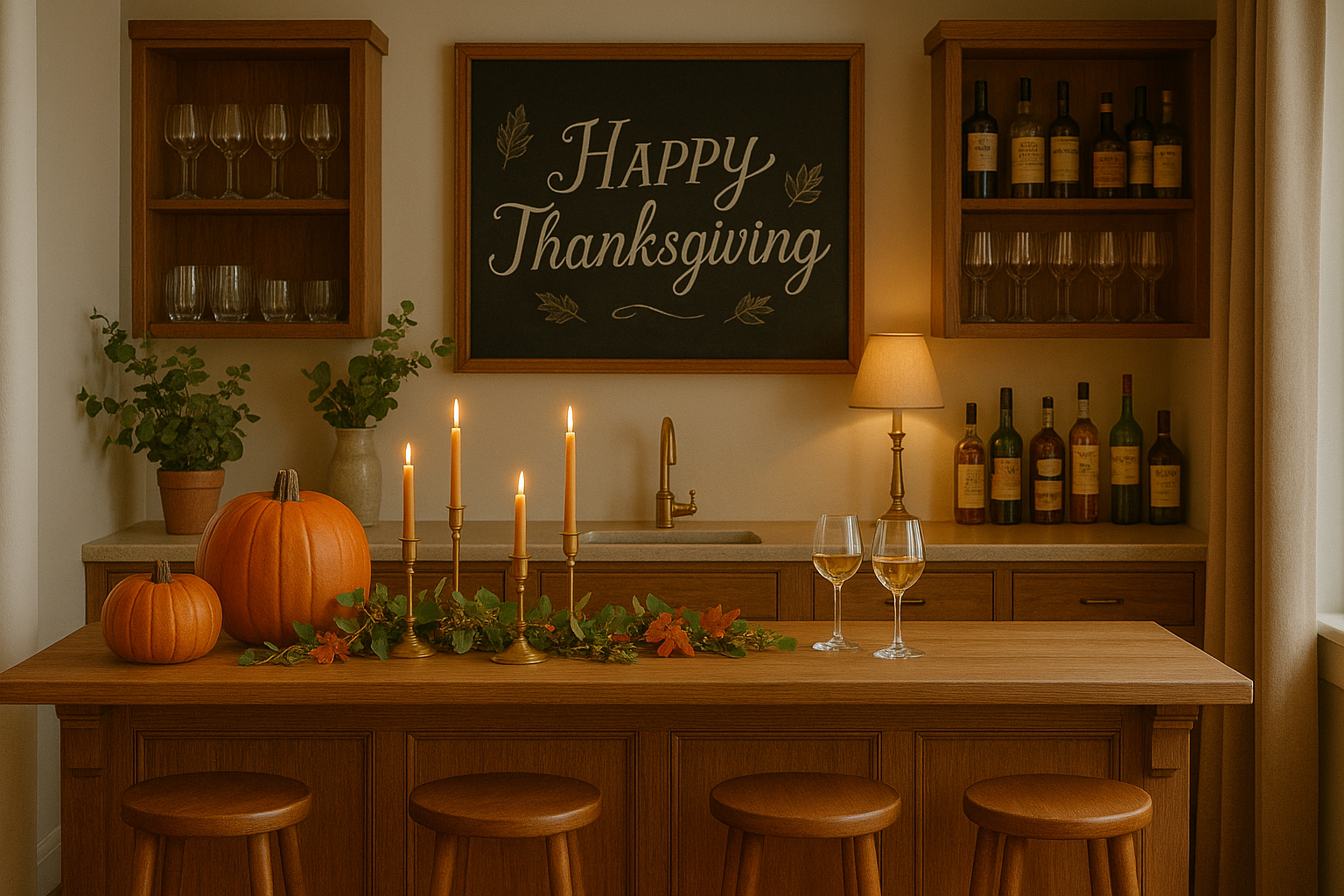
A small countertop, sideboard, or bar cart becomes a functional pre-dinner hub.
Key components:
- Soft lighting (again, 2700K ideally)
- A tray with glasses to create visual order
- Carafes or dispensers for water and seasonal drinks
- A small floral or candle moment to tie it to the dining area
3. The Functional Kitchen: Designing for a Smooth Thanksgiving Workflow
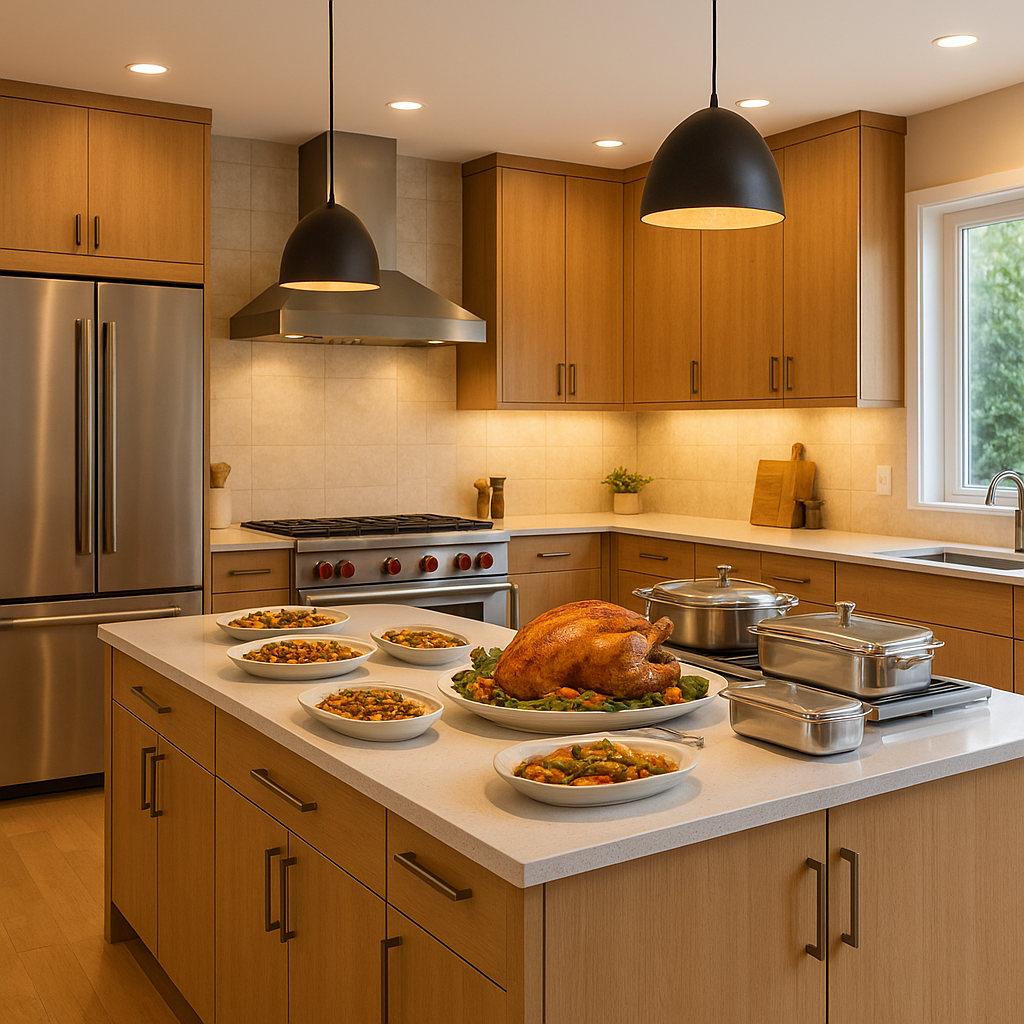
Thanksgiving is one of the biggest stress tests for a kitchen. Good design makes the day dramatically easier — even in small spaces.
Work Zones to Prioritize
- Prep Zone:
- Keep this close to the sink.
- Use cutting boards that can partially cover the sink to expand workspace.
- Add task lighting to avoid shadows (under-cabinet lighting in warm white is ideal).
- Cooking Zone:
- Make sure counter space exists on both sides of the stove for hot pans and trays.
- If space is tight, use a heat-proof trivet on an adjacent surface.
- Staging & Holding Zone:
This is the secret weapon for holiday hosting.- Use a peninsula, island, or even a folding side table to stage dishes before they go to the table.
- Add a warming element such as:
- A drawer-style warming oven
(ideal, but not always available) - An induction warming mat
- Hot water bottles wrapped in towels under trays (a professional catering trick)
- Insulated casserole carriers used open as warmers
- A drawer-style warming oven
- Clean-Up Zone:
The best design conceals mess while allowing the host to enjoy the evening.- Use large, deep dish bins or baskets tucked under the counter or inside a pantry.
- A rolling cart with a cloth cover can hide dirty dishes and be wheeled out of sight.
- If the kitchen is open-concept, consider a partial-height partition or plant to hide the sink area.
Lighting in the Kitchen
- Layered lighting is essential:
– Ceiling ambient lighting
– Under-cabinet task lighting
– Accent lighting (pendants over islands) - Aim for 3000K lighting, slightly cooler than the dining area but still warm.
4. Post-Dinner Flow: Keeping the Space Beautiful While Handling the Mess
Once dinner ends, good spatial planning prevents overwhelm.
Create a Temporary Dish Drop Zone
- Set up a hidden or semi-hidden station:
- inside a laundry room
- in a butler’s pantry
- inside a tall cabinet with pull-out trays
- Line trays and bins with dish towels to reduce noise and protect surfaces.
Relaxing Living Space Reset
After cleanup, return guests to a comfortable, recalibrated lounge atmosphere:
- Dim the lights even further for a “winding down” mood.
- Swap bright candles for smaller tealights or LED votives.
- Add throws and soft textures to shift from the energy of dinner to the ease of conversation.
5. Bringing It All Together: A Holiday Home That’s Functional and Beautiful
A thoughtful Thanksgiving experience is rooted in design decisions that support flow, comfort, and visual harmony.
When light is warm, sound is softened, materials are layered, and movement feels intuitive, the holiday becomes stress-free — and your home becomes the stage for meaningful connection.
Whether you’re designing a new kitchen, updating an open-concept living space, or simply planning your holiday layout, these spatial strategies help elevate every moment of your Thanksgiving celebration.

If you’re considering a renovation or want to learn how good design can transform everyday living — and holiday hosting — reach out to Sebastian Eilert Architecture.
We’d love to help you create spaces that are beautiful, resilient, and tailored to the life you want to live.
Sebastian@SebastianEilert.com
 Miami Green Homes
Leave a comment