
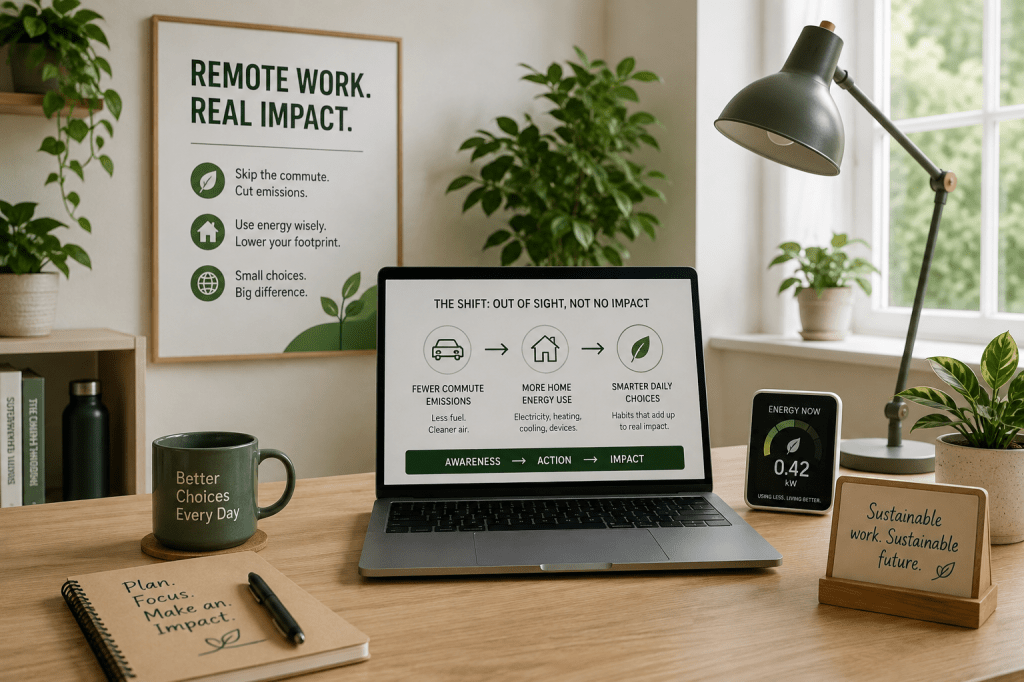
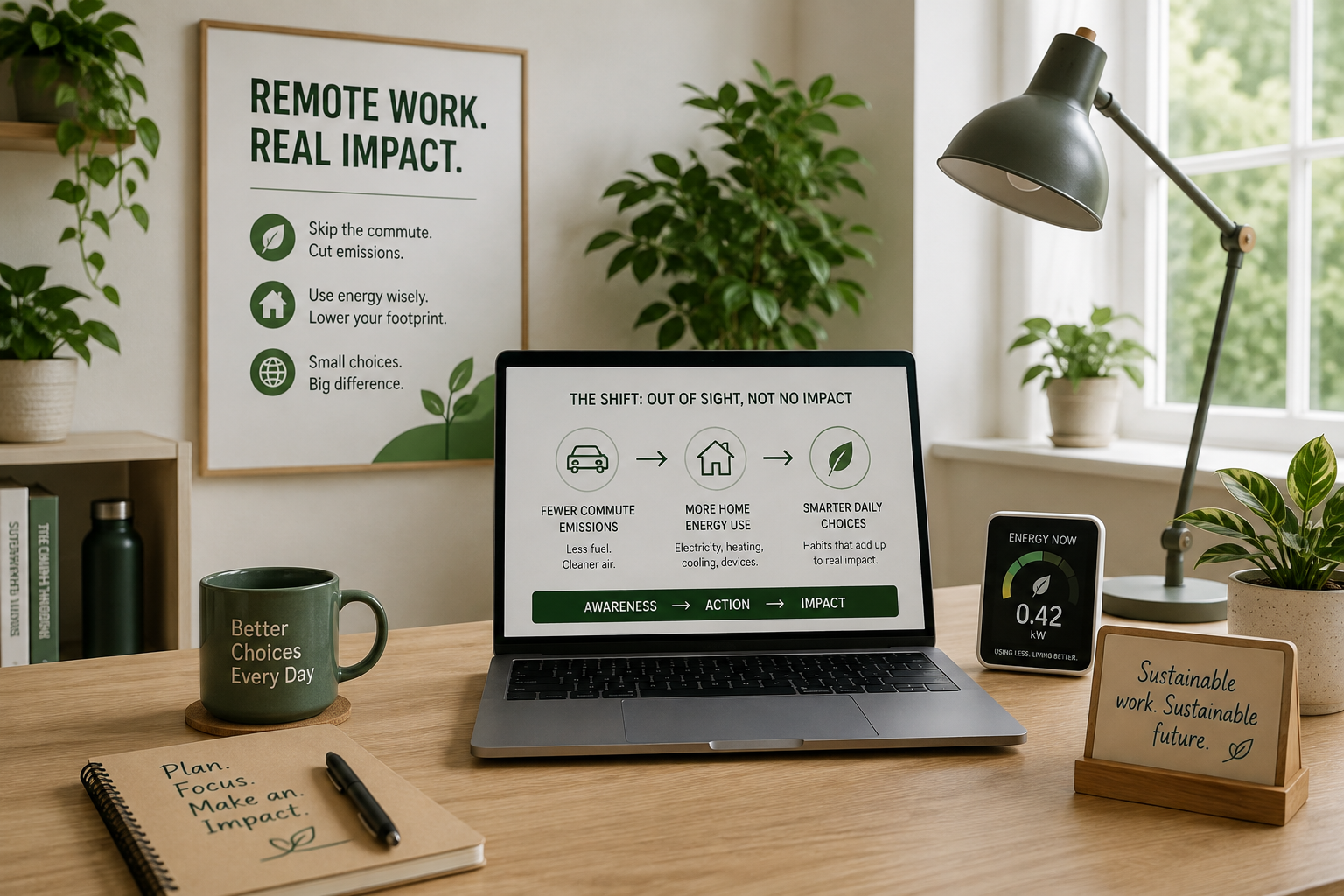
For hybrid-curious professionals, freelancers, and managers leading distributed teams, remote work sustainability can feel oddly uncertain: skipping a commute sounds greener, yet the environmental impact of telecommuting shifts emissions into places that are harder to see. The core tension is that an individual carbon footprint can shrink in one area while growing in another, especially as home energy consumption rises and daily routines change. With a clearer view of where impacts actually move, remote workers can make confident choices that fit real life instead of guesswork. This is the starting point for building sustainable remote work practices that hold up week after week.
Go Paper-Light: Build a Digital Document Workflow That Sticks
Once your commute shrinks, the easiest next footprint cut often comes from what you don’t bring into your home office: paper. Creating and sharing digital documents reduces the need for paper, printing, and physical storage, which helps remote workers lower waste and the energy tied to producing, transporting, and running printers at home. Keeping files in a digital format also makes it easier to find, reuse, and update what you already have, so you’re less likely to print “just this once” and start accumulating extra copies.
Saving key documents as PDFs can be especially helpful because they preserve formatting across devices and are easy to share without the layout shifting. And if you do need to tweak something after the fact, using a tool to edit PDF files online can help you make changes without reprinting or rescanning. With paper-light habits in place, it’s easier to see what else truly changes, at home and in your daily routines, when work moves offsite.
Understanding What Really Drives Remote Work Emissions
Remote work changes your footprint in three main places: energy you use at home, travel you avoid, and the habits that shift around your day. The goal is not to label telework as always good or bad, but to see which of those levers is biggest for you.
This matters because the wins are not automatic. Home power can rise when your laptop, lights, and heating run longer, and some data shows residential electricity consumption is 16 percent higher during work hours. At the same time, skipping the daily drive is often a major cut, and a Cornell and Microsoft study found remote workers can have a 54% lower carbon footprint.
Think of it like a set of scales. Removing commuting weight helps, but extra home heating, midday errands, or more deliveries can add weight back. With these drivers clear, energy saving office habits and low impact tech choices feel much more doable.
Remote Work Sustainability Questions, Answered
Q: What are the easiest home office changes that actually save energy?
A: Start with what runs the longest: heating or cooling, lighting, and idle electronics. Work in one room, use task lighting instead of brightening the whole house, and set your computer and monitor to sleep quickly. Plug your setup into a power strip and switch it off at the end of the day.
Q: How can I avoid my home power use creeping up while I work remotely?
A: Put your workspace near daylight, then “dress for the thermostat” before turning up heat or AC. The EIA outlook that residential energy consumption is on an upward climb is a good reminder to check basics like weatherstripping and smart schedules. A simple weekly habit is reviewing your thermostat and device settings every Friday.
Q: When I do go into the office, what commuting options are most sustainable?
A: If you can, choose transit, carpooling, biking, or walking for at least part of the trip. Combine errands into that same commute so you avoid extra car miles later. Even switching just one or two days can make a noticeable difference.
Q: How do I cut the energy tied to video calls, cloud storage, and streaming?
A: Default to audio when video is not needed, and lower video quality for large meetings. Close unused tabs, unsubscribe from auto-uploading apps, and delete old files to reduce constant syncing. Download music or training videos once instead of repeatedly streaming.
Q: Can remote work still help if my job needs occasional office days and deliveries?
A: Yes, because fewer driving days can still be a major lever. The 17% drop in carbon tied largely to fewer cars on the road shows how powerful reduced commuting can be. Aim to batch deliveries and pick slower shipping when possible.
Learn From Home: Build Remote-Ready Skills Without the Commute
Once you’ve cleared up the practical “how do I do this sustainably?” questions, it helps to look at how you can grow your career in ways that also cut emissions. Earning an online degree can strengthen the communication, self-management, and digital collaboration skills that make remote work successful, while avoiding the commute to and from campus that adds transportation emissions. Studying from home can also reduce the energy tied to in-person learning spaces, turning career development into a more sustainable choice. If you’re considering a computer science degree, it can build your skills in IT, programming, and computer science theory; a thorough overview can help you map what you’d learn to the kinds of remote-ready roles you’re targeting.
Understanding Your Work-From-Home Energy Drivers
Working from home shifts your footprint from the road to your rooms. The key is to spot the biggest energy drivers in your day: how efficiently you heat and cool, how much power your devices draw, and when you use them. Once those are clear, you can choose a few small home strategies that reliably add up.
This matters because comfort usually costs more than your laptop. Many homes see half of your energy bill tied to heating and cooling, so even tiny thermostat and airflow tweaks can beat most gadget swaps. Timing helps too, and always-on gear is a quiet leak, with wasted standby energy adding up worldwide.
Picture a typical weekday: you bump the heat all day, run a second monitor, and leave the router, printer, and chargers on 24/7. The quickest wins might be sealing drafts, using a smart schedule, and powering down devices between meetings.
Understanding Remote Work’s Indirect Footprint
Remote work sustainability is not just about your power meter. It also includes the indirect effects of how you buy things, how often packages arrive, and how much online activity your day demands. The goal is to notice these hidden drivers, then prioritize the few changes that cut the most impact, including paper-light workflows.
This matters because small “convenience” habits can quietly cancel out your energy wins. The digital carbon footprint shows that streaming, cloud storage, and always-on collaboration tools add up beyond what you see at home.
Imagine you skip a commute but replace it with more same-day deliveries, more returns, and nonstop video calls. You may still be greener overall, but the best gains come from trimming the high-frequency habits first. With indirect impacts visible, one eco-conscious next step becomes easy to choose and sustain.
Build a Smaller Footprint Through Everyday Remote Work Choices
Remote work can cut commuting emissions, yet it can also quietly grow your footprint through deliveries, always-on devices, and convenience habits. The way forward is a simple mindset: treat sustainable remote work habits as eco-conscious daily routines, then keep refining what matters most, at home and online. Over time, those choices add up to environmentally responsible telecommuting that supports long-term sustainability practices without needing perfection. Small, consistent choices at home create the biggest sustainability wins over time.


Leave a Reply