
Biophilic design connects people with nature through architecture — not as a passing trend, but as a science-backed approach to improving wellbeing at home. As our daily environments evolve to support work, family, rest, and recreation under one roof, creating a meaningful relationship to nature becomes essential. Natural elements can lower stress, improve mood, enhance focus, and support physical health, making biophilic design one of the most impactful strategies for a healthier home.
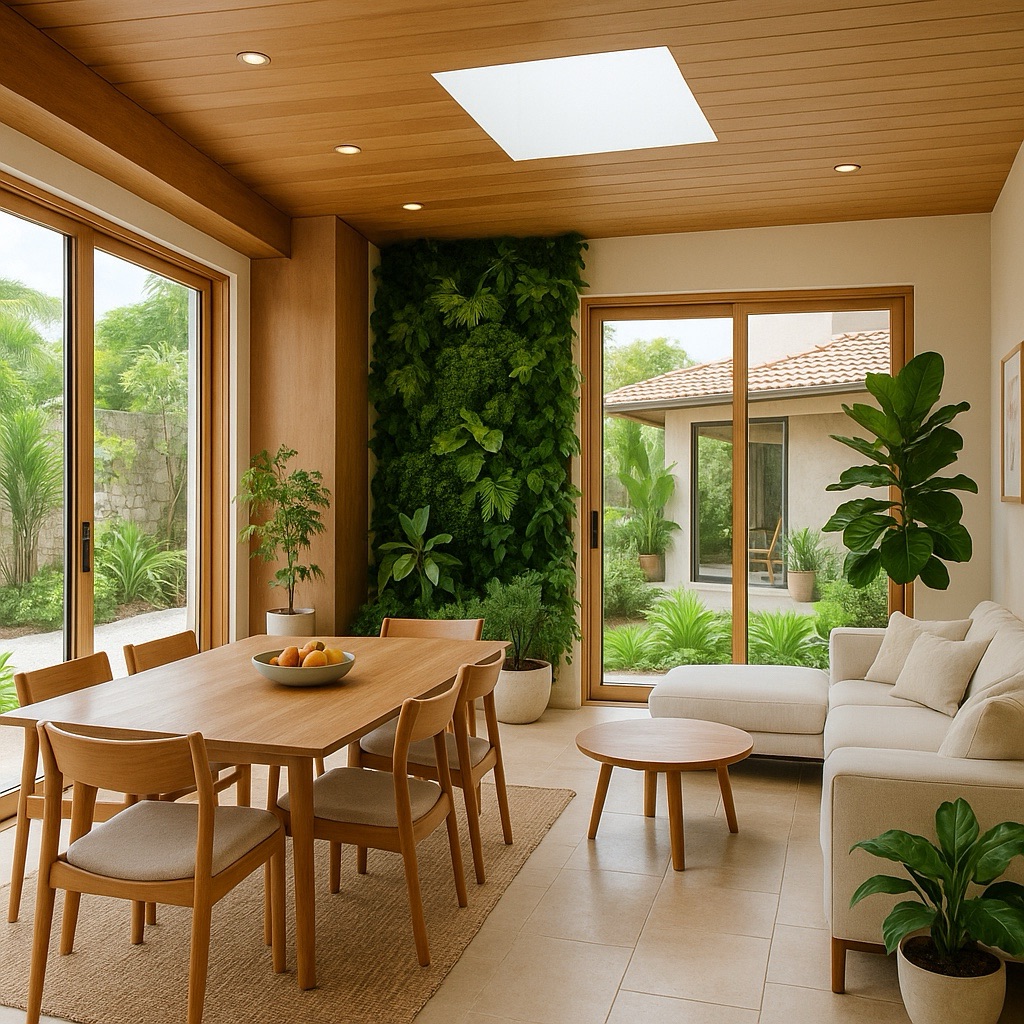
One of the most effective ways to start is by framing deliberate views to nature. Large windows, sliding glass doors, and strategically placed openings draw the eye outward, creating a sense of expansion even in compact spaces. In tropical and subtropical climates like South Florida, these visual connections also allow homeowners to experience shifting daylight, lush greenery, and seasonal weather changes, reinforcing a deeper sense of place.
Natural ventilation plays an equally important role. Cross-breezes, operable skylights, and covered outdoor living areas can dramatically improve indoor air quality and comfort. When designed intentionally, these passive strategies reduce reliance on mechanical cooling systems and create a more sensory indoor environment — one where airflow, scent, and sound reflect the living landscape just outside the walls.
Material selection further strengthens the human-nature connection. Authentic materials such as natural wood, stone, cork, clay finishes, and textiles introduce warmth, texture, and organic pattern. Beyond their sensory qualities, these materials typically have lower chemical off-gassing and age gracefully, contributing to a healthier and more timeless home environment.
For homeowners ready to embrace more immersive biophilic features, living walls, indoor gardens, built-in planters, and micro-greenery zones bring the benefits of nature into everyday routines. Herbs in the kitchen, tropical plants in the bathroom, or a vertical green panel in an entryway can transform the way you move through your home. Larger interventions — like indoor courtyards, sunrooms, and atriums — blur the threshold between indoor and outdoor spaces, creating continuity throughout the home.
Lighting is another cornerstone of biophilic design. Thoughtful daylighting strategies — from clerestories to light wells to UV-filtered glazing — bring soft, dynamic light into interior spaces. Daylight shifts subtly throughout the day, supporting circadian rhythms and creating visual interest that artificial lighting systems simply can’t replicate.
At Sebastian Eilert Architecture, biophilic design is integrated from concept to completion. Whether you’re renovating a kitchen, designing an ADU, or building a custom home, every project can bring nature inside in a meaningful and sustainable way. Regardless of the size or location — a Miami high-rise or a Kentucky hillside residence — thoughtful, nature-inspired design creates spaces that feel healthier, calmer, and deeply connected to the environment.
Bring nature into your home and elevate your daily wellbeing — contact Sebastian Eilert Architecture to learn more or begin your own biophilic design project.
📧 Sebastian@SebastianEilert.com
 Miami Green Homes
Leave a comment