
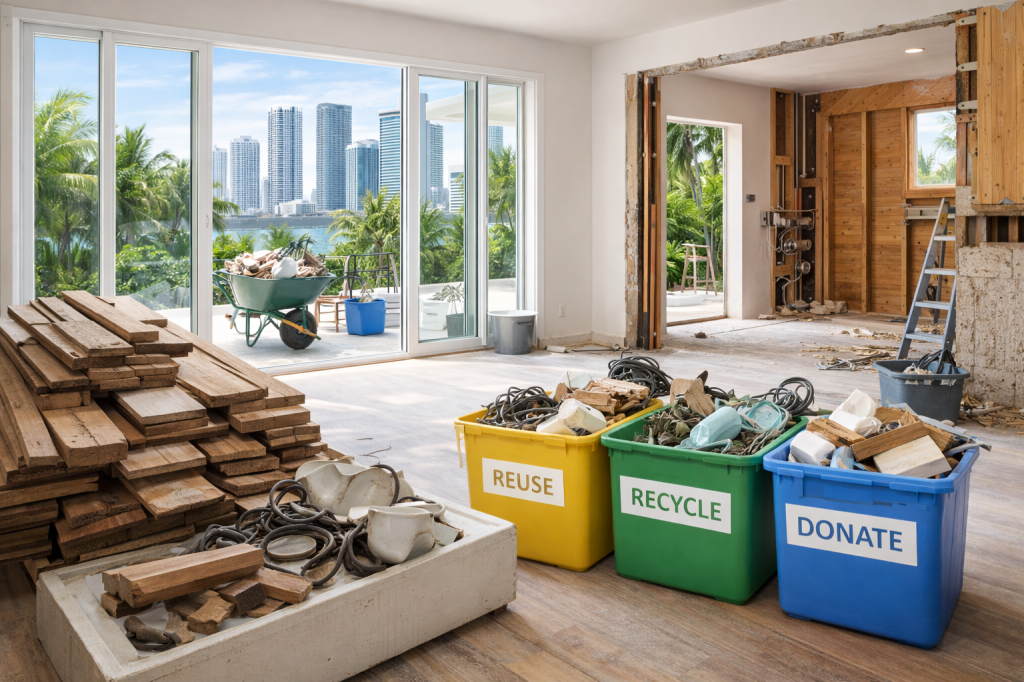
Renovation is often treated as a blank slate—gut the house, fill a dumpster, and rebuild from scratch. While this approach may feel efficient, it is usually the most expensive, wasteful, and least sustainable way to renovate.
In Florida, where many homes are structurally solid but functionally outdated, waste-free renovations offer a smarter alternative. By reusing materials, minimizing demolition, and designing around what already works, homeowners can significantly reduce construction waste while saving money and improving performance.
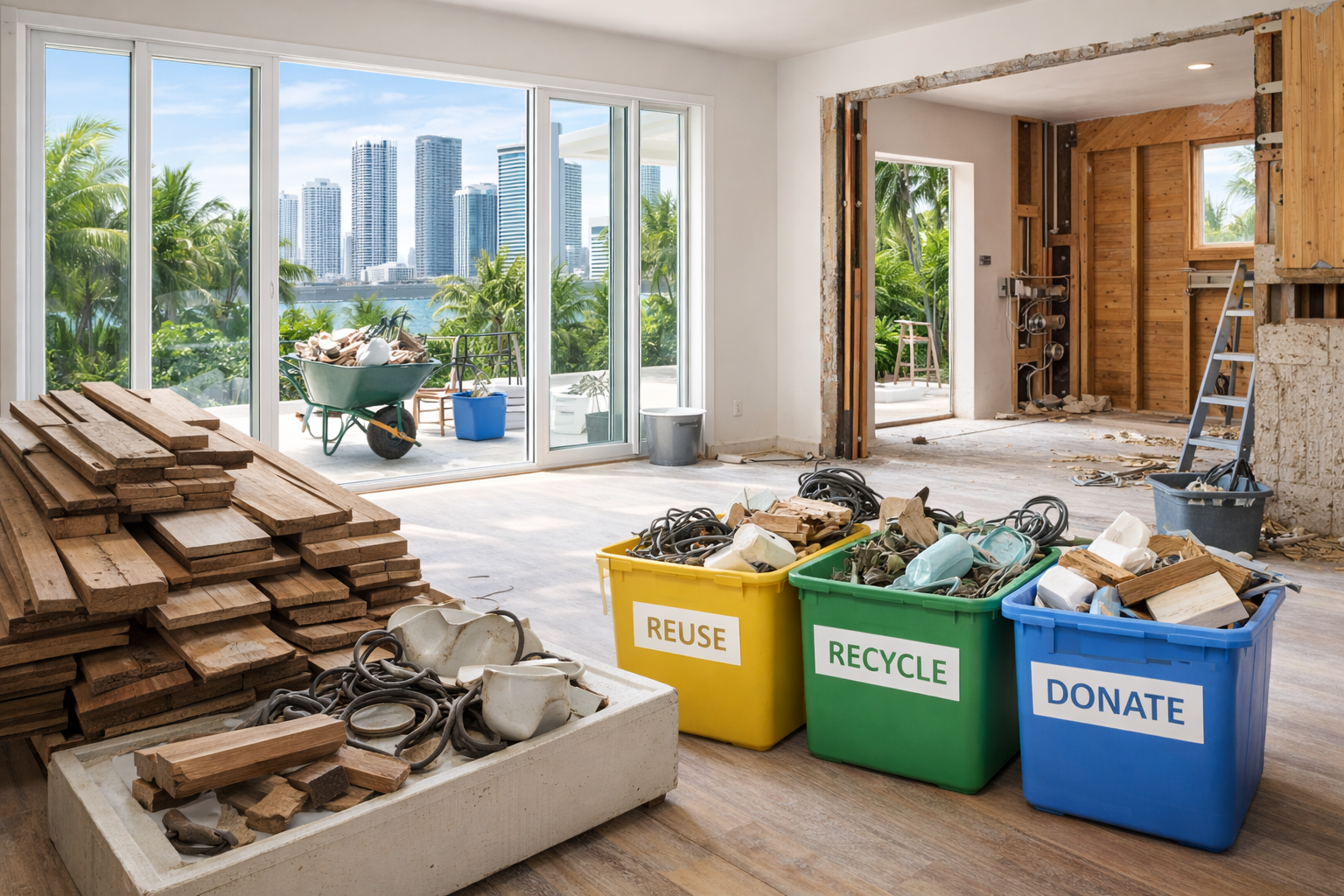
The Real Cost of Construction Waste
Construction and demolition waste is one of the largest contributors to U.S. landfills. In residential renovations, waste typically comes from:
- Full interior gut renovations
- Demolishing structurally sound walls and slabs
- Discarding reusable cabinetry, doors, and finishes
- Poor coordination between design and construction
In Florida, disposal fees, hauling costs, and limited recycling options can quietly add thousands—or tens of thousands—of dollars to a renovation budget without improving the final outcome.
Design Before You Demolish
The most effective waste-reduction strategy is simple: design first, demolish second.
Architect-led renovations begin by identifying:
- What is structurally sound
- What can be adapted instead of replaced
- Where small layout changes can avoid major demolition
Selective demolition reduces labor, shortens schedules, and dramatically cuts waste. In many cases, keeping one wall or slab penetration intact can eliminate an entire dumpster.
Reuse Is Not a Compromise — It’s a Strategy
Many elements removed during renovations still have decades of life left.
Common opportunities for reuse include:
- Concrete slabs and foundations
- Structural masonry or concrete walls
- Roof framing and decking
- Cabinet boxes with new fronts or hardware
- Interior doors, trim, and millwork
- Terrazzo, tile, or hardwood flooring
Reusing these components often drives stronger design decisions, especially in mid-century and post-war Florida homes where proportions and materials are already well resolved.
Material Selection: Durability Beats Trend
When new materials are necessary, durability matters more than novelty.
Smarter renovation materials:
- Perform well in heat and humidity
- Can be repaired instead of replaced
- Have longer life cycles
- Reduce embodied carbon
Examples include:
- Concrete, masonry, and fiber-cement products
- FSC-certified or reclaimed wood
- Modular or demountable cabinetry
- Finishes that can be refinished over time
Short-lived trends create long-term waste.
Recycling and Salvage in Florida: The Reality
Florida presents unique challenges for waste reduction:
- Limited construction recycling facilities
- Heavy reliance on landfills
- Inconsistent municipal salvage programs
Because of this, on-site reuse is often more effective than off-site recycling. When recycling or salvaging is possible, it must be planned early and coordinated with contractors — not treated as an afterthought.
Small Design Decisions, Big Waste Reduction
Waste-free renovations don’t require perfection — they require intention.
High-impact strategies include:
- Aligning new layouts with existing plumbing
- Reducing unnecessary wall relocations
- Preserving slab penetrations
- Upgrading systems without full replacement
- Designing flexible spaces that adapt over time
Each small decision compounds, reducing waste and cost across the project.
Waste Reduction Is Sustainability in Action
A renovation that:
- Preserves embodied energy
- Reduces landfill waste
- Uses fewer new materials
- Extends the life of the building
…is often more sustainable than a complete rebuild. Waste-free renovation is one of the most practical, cost-effective sustainability strategies available to homeowners.
Designing Smarter Renovations in Florida
At Sebastian Eilert Architecture, we believe the most sustainable renovation is the one that wastes the least. From selective demolition and material reuse to climate-appropriate detailing for South Florida homes, we help clients renovate thoughtfully, efficiently, and responsibly.
If you’re considering a renovation and want to reduce waste, control costs, and design for long-term performance, let’s talk before the dumpster shows up.
📩 Contact: info@sebastianeilert.com
🌐 Learn more: https://sebastianeilert.com
 Miami Green Homes
Leave a comment