
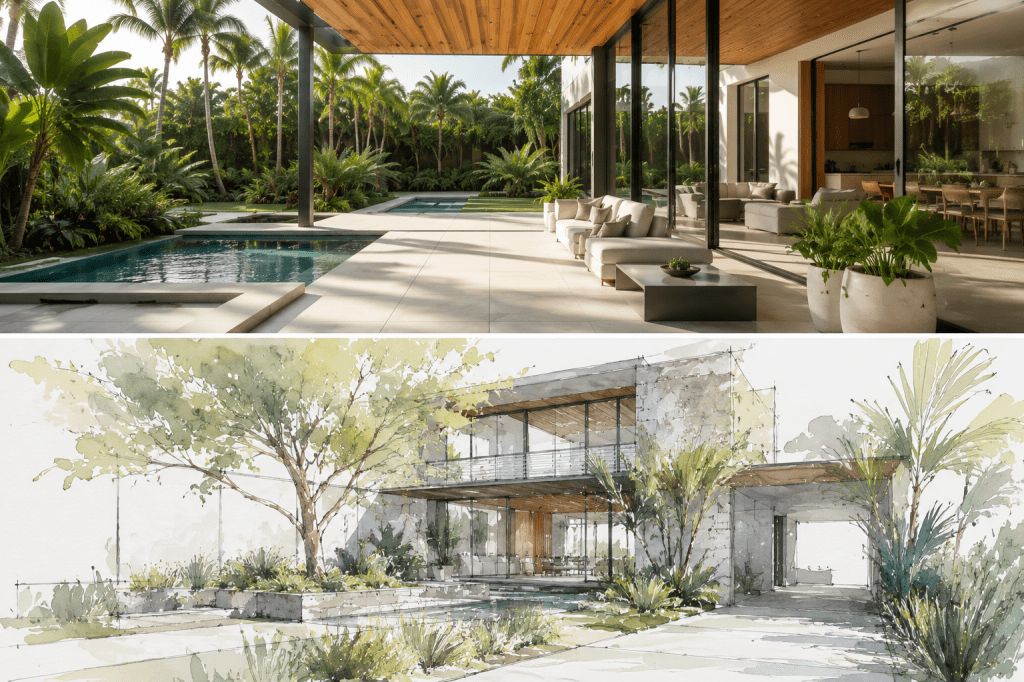
Architecture usually enters the conversation when someone is ready to build. A property has been purchased, a wish list assembled, and the next question seems obvious: When do we start designing?
But some of the most consequential architectural decisions happen before the first line is drawn.
A home—whether newly purchased, inherited, or lived in for years—often has possibilities that aren’t immediately apparent. An awkward floor plan may be surprisingly easy to reorganize. A modest house on the right property may support a thoughtful addition. An older home may have qualities worth preserving rather than replacing. And occasionally, a property that looks full of potential simply isn’t compatible with what its owners ultimately want.
Understanding that distinction early can change everything that follows.
Looking Beyond What Is There Today
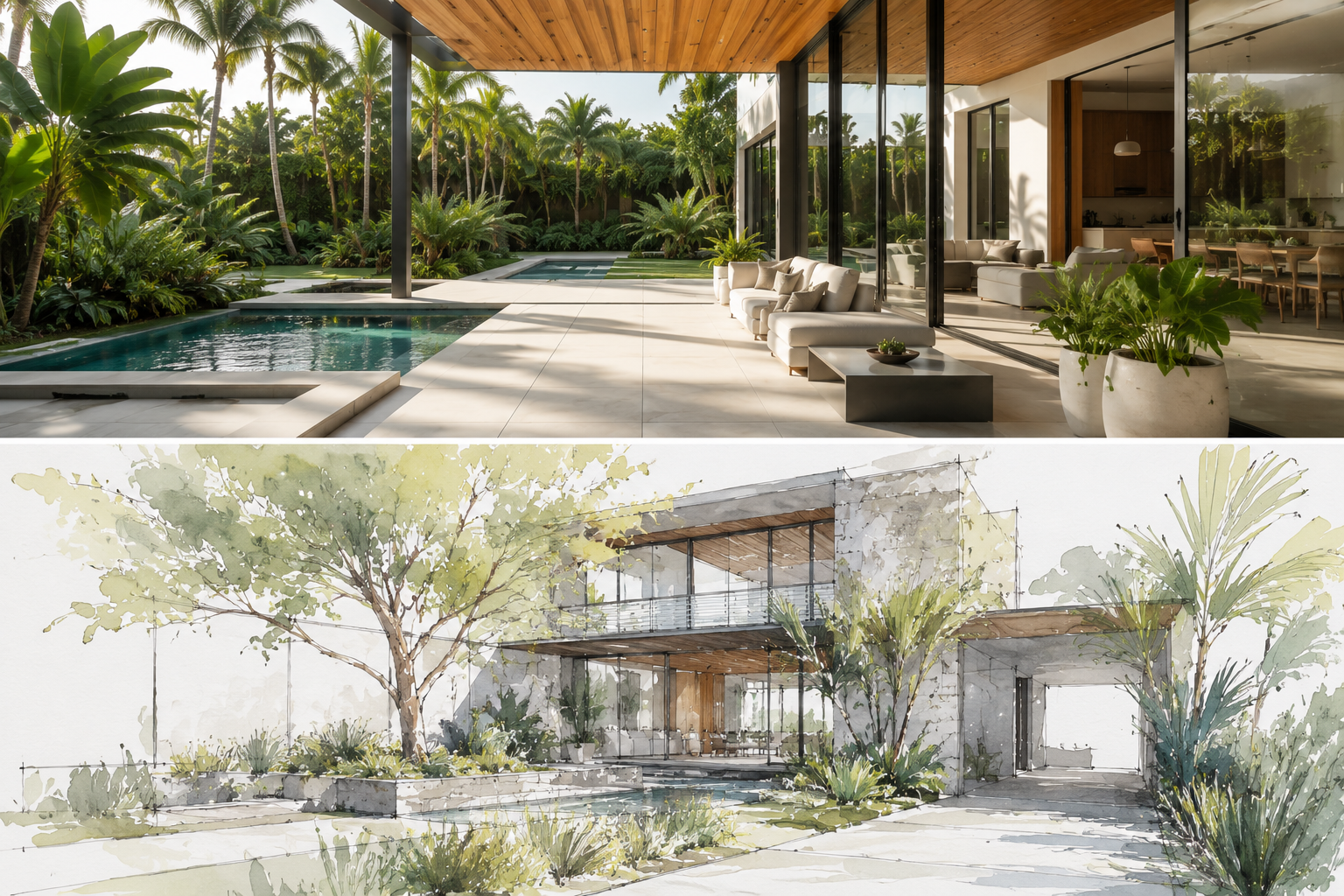
When evaluating a home, it is easy to focus on finishes and immediate impressions: the kitchen is dated, the primary suite is too small, the windows should be larger, or the outdoor spaces don’t connect well to the interior.
An architectural assessment looks beyond those individual issues.
How does the house sit on its property? Where are the opportunities for natural light and views? Can existing spaces be reorganized rather than expanded? Where could an addition logically occur? What zoning, site, structural, climate, or permitting conditions may influence those possibilities?
Most importantly: Can this particular property become the home its owners actually want?
That question is just as relevant before purchasing a house as it is when considering a major renovation.
Designing for More Than the Immediate Wish List
A successful home should solve today’s needs without becoming tomorrow’s problem.
Families change. Work moves home. Parents age. Children leave and occasionally return. Technology evolves. Climate conditions change. What begins as a guest room may eventually need to become an office, caregiver suite, or accessible bedroom.
This is where future-proofing becomes less about gadgets and more about thoughtful architecture.
Flexibility in a floor plan, sensible circulation, resilient materials, passive design strategies, infrastructure that can accommodate future technology, and spaces capable of changing purpose can all extend the useful life of a home.
The objective isn’t to predict the future perfectly. It is to avoid designing a home so specifically for one moment that adapting it later becomes unnecessarily difficult or expensive.
Renovate, Add—or Start Again?
There is also value in challenging the assumption that more construction is always the answer.
Sometimes an addition is exactly what a house needs. In other cases, reorganizing existing square footage can accomplish more with less construction. Certain homes deserve careful preservation and modernization. Others have accumulated so many compromises that replacement may ultimately make better architectural and financial sense.
There is no universal answer.
That is precisely why understanding the possibilities should come before committing to the project.
Architecture as an Early Conversation
An architect does not have to enter the process only after every major decision has already been made.
For someone considering a property purchase, substantial renovation, addition, or new home, an early architectural conversation can help establish what is realistic, identify opportunities that may otherwise be overlooked, and expose constraints before they become expensive surprises.
It can also create something less tangible but equally valuable: clarity.
At Sebastian Eilert Architecture, our work increasingly begins with that broader conversation—understanding not simply what a property is today, but what it could become and how it can continue to serve its owners over time.
Because an exceptional home rarely begins with a drawing.
It begins with understanding the possibilities.
Ready to explore what your home—or a property you’re considering—could become? Sebastian Eilert Architecture offers thoughtful, bespoke architectural guidance from the first conversation through design and realization. Contact SEA to begin the conversation.


Leave a Reply