
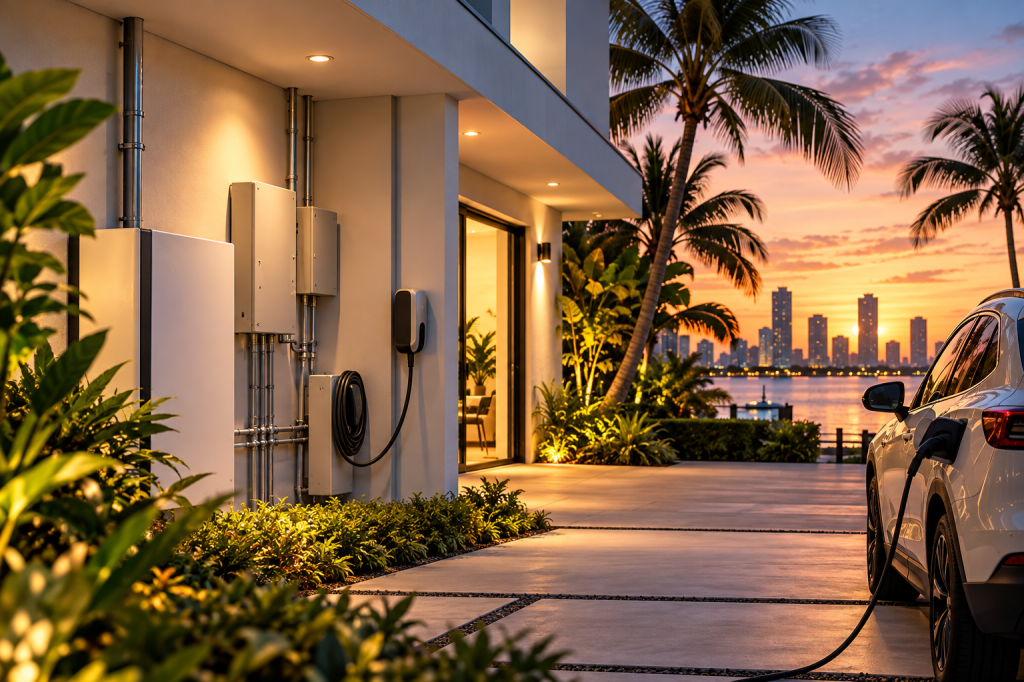
Why smarter homes begin with coordinated planning—not a shopping list.
Electrification is changing how we design, renovate, and operate our homes. From efficient air conditioning and heat pump water heaters to induction cooking, electric vehicles, and battery storage, homeowners have more options than ever.
But a better appliance does not necessarily make a better home.
The real value comes from understanding how these systems work together, how they affect the building, and how today’s decisions influence future improvements.
In Miami, we also need to consider something equally important: hurricane resilience.
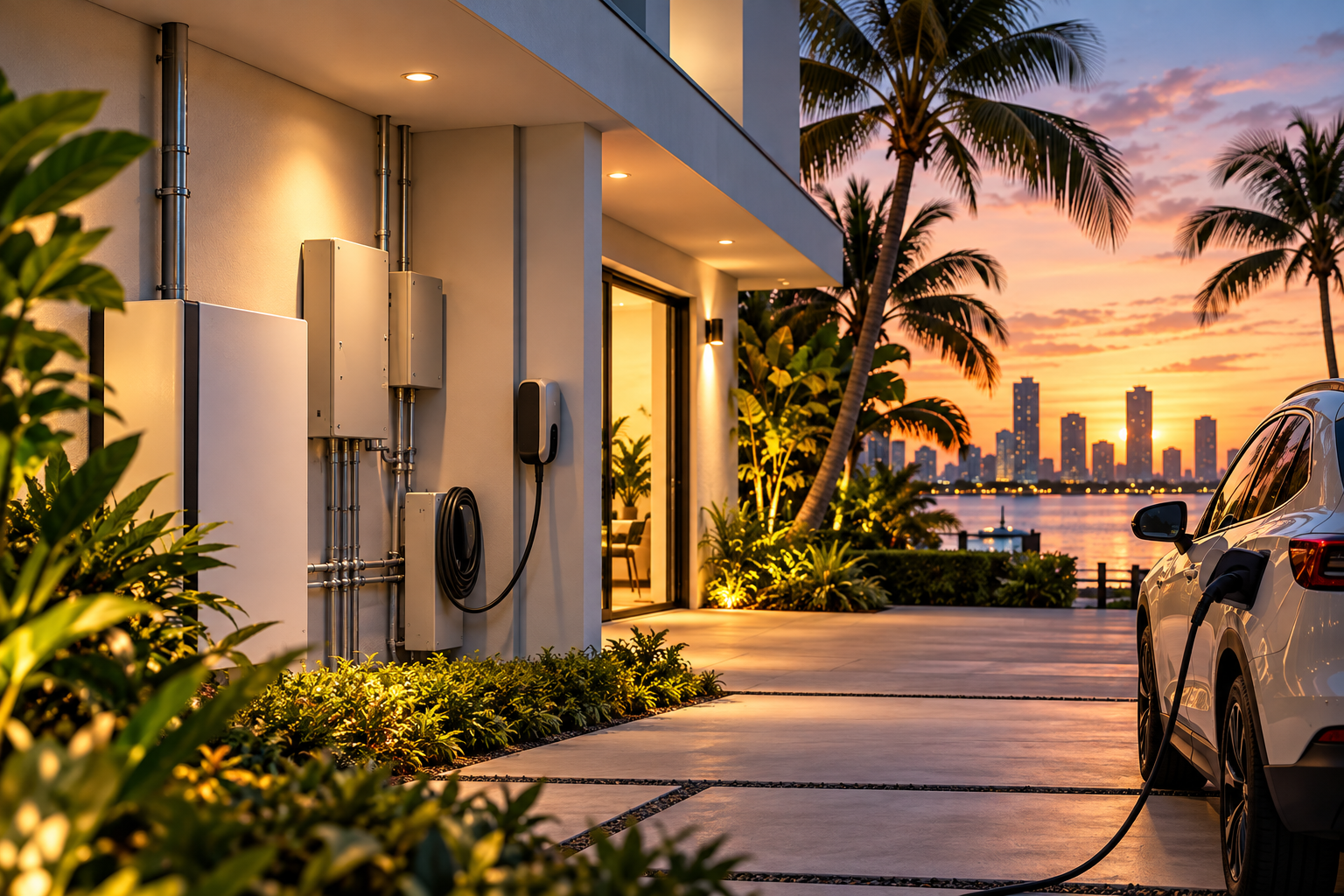
Start With the House, Not the Equipment
Most homeowners approach electrification one appliance at a time. The air conditioner fails, a water heater needs replacement, or a new electric vehicle requires charging.
These decisions make sense individually, but without a larger plan, they can become unnecessarily expensive or difficult to coordinate.
Installing an EV charger today, for example, without considering future electrical loads may complicate HVAC upgrades or battery storage later.
That does not mean every home needs a complete electrical overhaul. It means understanding the existing infrastructure before investing.
An assessment of the electrical service, panel capacity, and anticipated loads provides a foundation for informed decisions. Sometimes upgrades are necessary; in other cases, thoughtful load management may accomplish the same objectives.
The goal is not to install everything today. It is to avoid limiting tomorrow’s options.
Think in Systems, Not Individual Improvements
A home is an interconnected collection of systems. Changing one component can affect several others.
Consider these common improvements:
- Air conditioning: High-efficiency heat pumps should be evaluated alongside cooling loads, ductwork, humidity control, and electrical requirements.
- Water heating: Heat pump water heaters can reduce energy consumption but require appropriate space, drainage, and installation conditions.
- Induction cooking: An efficient alternative to gas cooking that may require electrical circuit modifications.
- EV charging: Charging capacity should reflect actual driving habits and available electrical service.
- Solar and battery storage: System selection should consider household consumption, roof conditions, future demand, and backup requirements.
The ENERGY STAR website provides useful information when comparing energy-efficient equipment.
The important question is not simply which product to purchase, but how each improvement fits into the building’s overall strategy.
In South Florida, Resilience Changes the Conversation
Energy efficiency matters, but Miami’s climate demands more.
Heat, humidity, salt exposure, flooding, and hurricanes are part of the environment our buildings must withstand.
Electrification and resilience are closely related, but they are not interchangeable. A home equipped with efficient electric appliances is not automatically prepared for an extended power outage.
If battery storage is being considered, start by identifying which functions must remain operational. Refrigeration, communications, lighting, and limited cooling may be priorities, while other households have different requirements.
These decisions influence battery capacity, electrical distribution, equipment placement, and future improvements.
Flood exposure, wind resistance, and permitting requirements must also be considered. The Miami-Dade County Hurricane Preparedness resources offer valuable guidance for homeowners.
Resilience should be part of the design conversation from the beginning—not an afterthought.
Develop a Roadmap That Works With Your Budget
Not every improvement needs to happen immediately. Replacing functioning equipment prematurely may not be the most economical or environmentally responsible decision.
Instead, develop a long-term strategy based on existing conditions, replacement cycles, available infrastructure, and personal priorities.
Begin with an electrical assessment and an inventory of major equipment. Identify future improvements, coordinate their requirements, and implement them as opportunities arise.
When the air conditioner eventually needs replacement, the homeowner already understands how it fits into the larger plan. When solar or battery storage becomes attractive, the house is better prepared.
This approach provides flexibility while reducing unnecessary work and expenses.
Incentives and Documentation Matter
Financial incentives can influence when improvements make sense, but they should not dictate the overall design strategy.
Programs change, and eligibility may depend on equipment specifications, installation dates, and other requirements.
Homeowners should review the Florida Energy Saver Program and Florida Power & Light’s savings programs for current opportunities.
Federal residential energy tax credits available in previous years generally ended for new qualifying expenditures after December 31, 2025. Verify current eligibility and applicable rules before committing to any purchase.
Keep equipment specifications, permits, contractor proposals, and warranties organized. These records are valuable when planning future improvements or coordinating with new professionals.
A Home Designed to Adapt
Ultimately, electrification is not about replacing every appliance or installing the latest technology.
It is about making deliberate decisions that improve performance today while preserving flexibility for tomorrow.
For Miami homeowners, this means balancing efficiency, comfort, resilience, construction costs, and long-term maintenance.
A coordinated plan helps reduce unnecessary work, improves collaboration between trades, and directs investments toward improvements that provide lasting value.
Good design is not just about solving today’s problems. It is about anticipating tomorrow’s needs.
And that is where a smarter, more resilient home begins.
Planning Your Next Home Improvement?
At Sebastian Eilert Architecture, we help homeowners evaluate existing conditions, identify opportunities, and develop coordinated strategies for more efficient, resilient, and future-ready homes.
Contact us to discuss your next project.


Leave a Reply